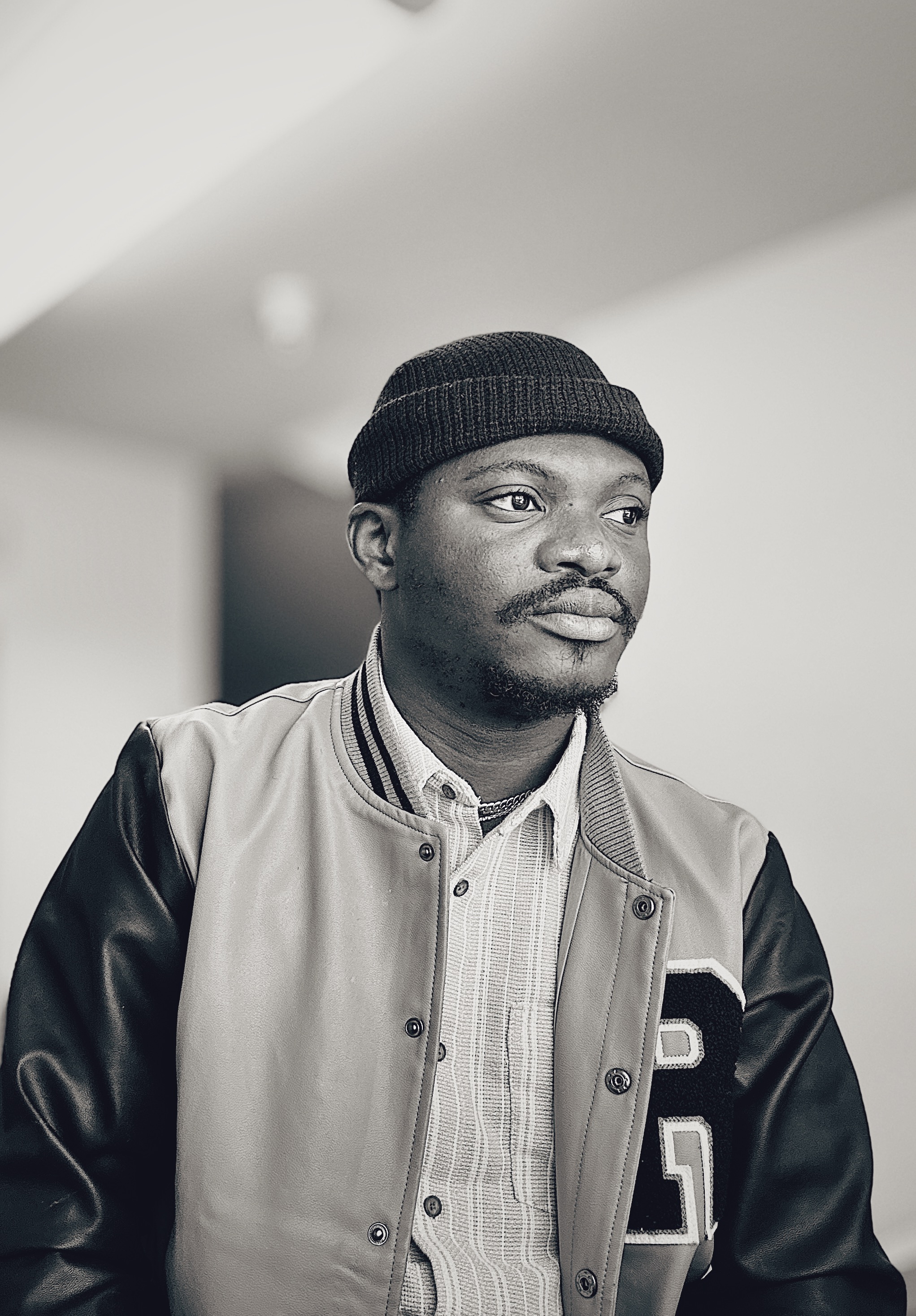
Steven Duong’s debut collection, At the End of the World There Is a Pond, emerges at a pivotal moment in contemporary American poetry, when questions of environmental crisis, diasporic identity, and formal innovation demand urgent attention. The collection’s sophisticated engagement with theoretical frameworks—from Édouard Glissant’s concept of errantry to Donna Haraway’s notion of “staying with the trouble”—positions it within current academic discussions while maintaining an emotional resonance that transcends purely theoretical concerns. These intertwined themes of ecological vulnerability and cultural displacement motivate and necessitate Duong’s formal choices. In an era where poetry often struggles to balance political engagement with aesthetic achievement, Duong’s work demonstrates how formal innovation can emerge from historical necessity.
Building on this foundation of necessity and innovation, the collection’s organizational principle—categorizing poems into “Jumpers,” “Swimmers,” “Sinkers,” and “Floaters”—operates as a theoretical apparatus for understanding different modes of diasporic experience. This taxonomy echoes what Sau-ling Cynthia Wong considers “mobility narratives” in Asian American literature, while suggesting new ways of conceptualizing movement and stasis. Much like Wong’s analysis of spatial mobility as a key trope in Asian American literature, Duong’s categorical framework suggests that different forms of movement—and different relationships to water—might serve as metaphors for various strategies of survival and adaptation.
This focus on categorization and movement finds its earliest echo in the collection’s opening epigraph about guppies, which establishes its central concerns:
In studying the jumping behavior of guppies, it was clear to Soares and Bierman that the fish did not jump to escape predators—neither were they jumping out of the tank to acquire food. This left the possibility that the guppies were jumping out of the water as a means of seeking another body of water. —Kate Barrington, “Aerial Jumping in the Trinidadian Guppy.”
This scientific observation becomes a powerful metaphor for diasporic movement that suggests that migration might be understood as an escape and speculative seeking. The epigraph’s clinical tone contrasts with the emotional weight it carries throughout the collection. This is an example of what Sianne Ngai would term the “aesthetic of the interesting”—where objective observation generates subjective significance. This tension between scientific observation and emotional resonance recurs throughout the collection, particularly in poems that engage with environmental crises. The collection’s environmental vision operates at the intersection of two critical frameworks: Rob Nixon’s “slow violence”—which examines how gradual environmental degradation often escapes dramatic representation and media attention—and Anna Lowenhaupt Tsing’s “arts of noticing,” which explores how marginalized communities develop specialized ways of perceiving ecological change through intimate, often overlooked interactions with disturbed landscapes. Throughout Duong’s poems, these theoretical approaches combine to reveal how environmental destruction manifests as a sudden and subtle catastrophe, accumulating shifts in the relationship between humans and their surroundings. Nowhere is this eco-critical lens more apparent than in “Best-Case Scenario,” where Duong writes:
This century ends underwater, the earth inherited by catfish
the size of sedans. The highways bloom into rivers &
the roaches
sprout gills. Business booms. Water striders stride. The
value of fins
skyrockets while the value of legs eats shit.
This vision of environmental transformation echoes Haraway’s concept of “sympoiesis,” which challenges traditional notions of autonomous selfhood and individual survival. Rather than viewing organisms as self-contained units that merely interact with their environment, “sympoiesis” suggests that all survival depends on complex networks of mutual dependence and co-creation. In Duong’s poetry, this ecological interdependence is portrayed with ambivalence, recognizing its necessity and precarity in a damaged world. His dark humor is evident here where it performs what Lauren Berlant terms “cruel optimism”—an attachment to compromised conditions of possibility. The image of catfish “the size of sedans” performs multiple functions: it suggests environmental mutation, but also implies a kind of revenge fantasy where the natural world adapts to and ultimately surpasses human infrastructure.
The collection maintains a sustained focus on water and aquatic life that points to what we might call “hydro-futurity”—a theoretical lens for examining how water shapes both historical memory and future possibility. This idea builds on Elizabeth DeLoughrey’s notion of “submarine futures” and connects with Stacy Alaimo’s concept of “trans-corporeality,” which highlights the material interconnections between human bodies and broader environmental systems.
Such interconnections come to the fore in the title poem, where water functions as a metaphor and embodies what Jane Bennett terms “vibrant matter,” acting as an active agent that influences human and non-human possibilities:
The water is wet, the fish finned
& wriggling.
Either that or the water wiggles,
keeping the fish fed
& watered.
Or no—the water feeds on
the fish, their upstream exodus, the wet
whittling the fish to bone.
—“At the End of the World, There is a Pond”
This attention to water’s agency demonstrates the idea that reality is produced through specific intra-actions rather than existing as a pre-given backdrop. The poem’s shifting attributions of agency—from fish to water and back again—suggest that the relationship between organisms and their environment might be more complex than traditional ecological models suggest. This complexity becomes particularly evident in the poem’s treatment of feeding and being fed, where the line between sustenance and consumption blurs.
Duong extends the environmental consciousness in this collection beyond simple nature poetry. In “Break in Case of Extinction Event,” Duong writes:
when the earth enters its blue phase
& the rivers leave their beds
unmade
when hurricanes pull undersea
your father’s father’s
fishery
& the sea shakes down the sky
& the insulin flows like oil
Here, Duong orchestrates a delicate interplay of sound, line breaks, and recurring motifs to heighten the poem’s tension. The repeated “when” functions like a relentless toll, summoning forth disaster after disaster as the environment collapses: “when the earth enters its blue phase / & the rivers leave their beds / unmade.” These tightly enjambed lines propel the reader from one unfolding catastrophe to the next, each stanza acting as another snapshot of a world tipped off-balance. Subtle sonic echoes—consonance in “rivers,” “hurricanes,” “fathers”—underscore the rumbling disquiet that permeates the poem.
Equally striking is the layering of personal and planetary imagery, as seen in lines that align a family’s fishery with the larger climate crisis. By juxtaposing references to “your father’s father’s / fishery” with the visceral image of “the insulin flows like oil,” Duong brings human vulnerability to the forefront. This convergence of medical necessity (insulin) and industrial hazard (oil) intensifies the poem’s urgency, collapsing the distance between environmental catastrophe and individual life. The poem’s juxtaposition of personal and planetary catastrophe—linking the fate of a family fishery to broader environmental collapse—suggests that climate change manifests in specific, localized ways while remaining part of a global pattern. This patchwork of experiences reveals how environmental degradation affects communities differently yet interconnectedly.
Duong’s poetic landscapes are both geographical and deeply familial, as revealed in the “Novel” sequence. The poems employ layered imagery and fragmented narrative to interrogate the nature of storytelling, inheritance, and self-construction. The line “Some bridges / between parents & children resist meaning / until crossed” evokes a central tension in the collection: the fraught navigation of familial relationships and the weight of intergenerational grief. The metaphor of the guppy—crushed, mourned, and then revealed as a lie—functions as a symbol for how personal and collective histories are shaped, distorted, and passed down. The act of storytelling becomes a form of lying, not in its intent to deceive but in its inevitable subjectivity, as captured in the admission, “I am not yet sure what kind of lie the novel is, but I tell it.” This duality—between truth and artifice—reverberates throughout the sequence, echoing the broader thematic concerns of the collection.
I am nearing the heart of it. Some bridges
between parents & children resist meaning
until crossed. When I was nine I crushed
a guppy underfoot & mourned for weeks
is a lie I like to tell. It was my mother
who cried, she who taught me to lie, & so
the mother & son in the novel are liars too.
Across the “Novel” poems, Duong situates the act of writing as both personal and political, using recurring logos like fish, water, and confinement to explore the constraints and possibilities of narrative. In an earlier “Novel” poem (“In a Chinese café disguised as a French café”), the betta fish serves as a metaphor for characters constrained by circumstance, “born / to break each other,” mirroring the mother-son relationship. The recurring fish imagery in this sequence—be it guppies or bettas—emphasizes the vulnerability and violence embedded in storytelling, particularly stories shaped by diaspora and displacement, the boundaries surrounding Duong’s work. The glass tank, a frequent image in the sequence, becomes a metaphor for the boundaries of identity and narrative structure, asking: what can escape the limits of form, and at what cost?
Through these “Novel” poems, Duong probes the porous boundary between fiction and reality, interrogating what is preserved, omitted, or fabricated in the act of storytelling. The sequence’s fragmented style mirrors the instability of memory, with each poem functioning as a self-contained vignette that feeds into the larger, unresolved narrative of the collection. By linking the personal—the speaker’s fraught relationship with their mother and their art—to the structural—the process of novel writing—Duong crafts a layered meta-commentary on how stories, like lives, are shaped by deliberate intention and unintended consequences.
Duong’s collection weaves traditional poetic forms and contemporary cultural references into a dynamic tapestry that explores identity, longing, and belonging. In “Ho Chi Minh City,” the ghazal’s repeated end word—“face”—creates a transnational resonance, as a Middle Eastern form migrates into a Vietnamese setting. This persistent refrain constructs a textual merging of time and space, while simultaneously revealing contradictions as each new instance of “face” recalibrates the speaker’s unstable selfhood. By adapting the ghazal, Duong also engages in a strategic repurposing of an inherited form to address personal and political questions of displacement.
Elsewhere in the collection, Duong alludes to hip-hop figures such as Future, Playboi Carti, and Rico Nasty, creating a sonic space where diverse cultural elements collide and produce fresh possibilities. In “Ode to Rico Nasty in the Year of the Rat,” the poet’s focus on hair as a site of transformation underscores the fluidity of self-fashioning, a move that simultaneously contests and creatively reimagines dominant culture. By constructing connections between the traditions of the ghazal and the innovations of contemporary music, Duong’s poems turn formal constraints into engines of discovery. Through the repeated refrain of “face” and the references to pop culture icons, the collection reveals a tension between heritage and reinvention. Each poem underscores the necessity of embracing contradiction, whether through translating a classical form into new cultural contexts or harnessing the energy of contemporary music to reframe personal history. Such cultural hybridization parallels how Duong’s environmental poems collapse distinctions between family histories and ecological crises, creating poetics where formal, cultural, or ecological boundaries remain permeable. Duong’s stylistic versatility emerges as both an aesthetic and political strategy, challenging fixed identities and creating hybrid poetic spaces for a modern, transnational self.
Amid these formal and cultural oscillations, Duong also displays a sophisticated handling of intergenerational trauma. “I Vow to Stop Putting It Mildly” shows how historical violence and present-day tenderness collide:
My father voted for your father
to die.
He did this with great enthusiasm,
animated by what he believed was
the spirit of his own father,
a civil engineer who spent a year
in a reeducation camp.
My father put your father
in a camp. He did this with his hands,
swiftly & without regrets, a harmonica
strapped to his neck
like a Jesus piece.
This treatment of intergenerational trauma explores how inherited memories shape identity even for generations who didn’t directly experience historical events. The comparison of a harmonica to a “Jesus piece” creates a moment where different cultural references collide to produce new meanings, demonstrating how Duong’s imagery bridges disparate worlds to express complex diasporic experiences.
Yet in the midst of these weighty themes, Duong suggests in “The Living” that survival itself can be understood as a form of art:
We’re all committed to some variation on it—it’s work, but living is work I can’t quite resign from. For now we pay our bills. It’s work, love. If not for yourself, do it for me. For our dogs & our birds & our trees.
The poem articulates survival as both a necessary condition and a deliberate choice. This suggests that envisioning alternative futures becomes imperative rather than merely aspirational despite living in the present far from ideal. The poem’s focus on everyday tasks—paying bills and feeding pets—underscores the lived realities and intangible yet pervasive sense of a particular historical moment. By attending to these mundane details, the poem reveals how survival is more than an instinctive response; it is an ongoing process of carving out spaces of possibility, shaped by both the material demands of daily life and the imaginative leaps that carry us beyond them.
Ultimately, this dual emphasis on imaginative possibility and material survival throughout At the End of the World There Is a Pond demonstrates Duong’s remarkable ability to integrate theoretical sophistication with emotional resonance. The poems breathe as a novel in verse, the world shifting from one pond to one lake. And although the collection’s central metaphor of water—encompassing diaspora, addiction, environmental crisis, and the ever-shifting nature of identity—provides a unifying thread that binds together seemingly disparate poems and forms, the collection does not forget ancestry, home, lineage, or city. The poems move between materiality and the metaphysical—interiority and the ephemeral.
In closing, it is worth revisiting the sense of “hydro-futurity” that permeates the book. Diaspora, much like water, finds its way into unexpected places, forging new ecosystems of survival. In such a time as this, when the political climate feels tense and unpredictable, this collection provides solace. However, Duong’s debut signals a new direction for Asian American poetry—one that is neither purely personal nor solely political, but lives at the intersection, harnessing complexity in pursuit of new forms of hope and resilience. His mastery of formal experimentation, combined with a keen cultural and ecological awareness, marks Duong as a poet of rigor and insight. Above all, At the End of the World There Is a Pond invites readers to linger in the unsettling confluence of personal memory, planetary instability, and the urgent need to imagine new waters—new worlds—where survival remains possible.
–