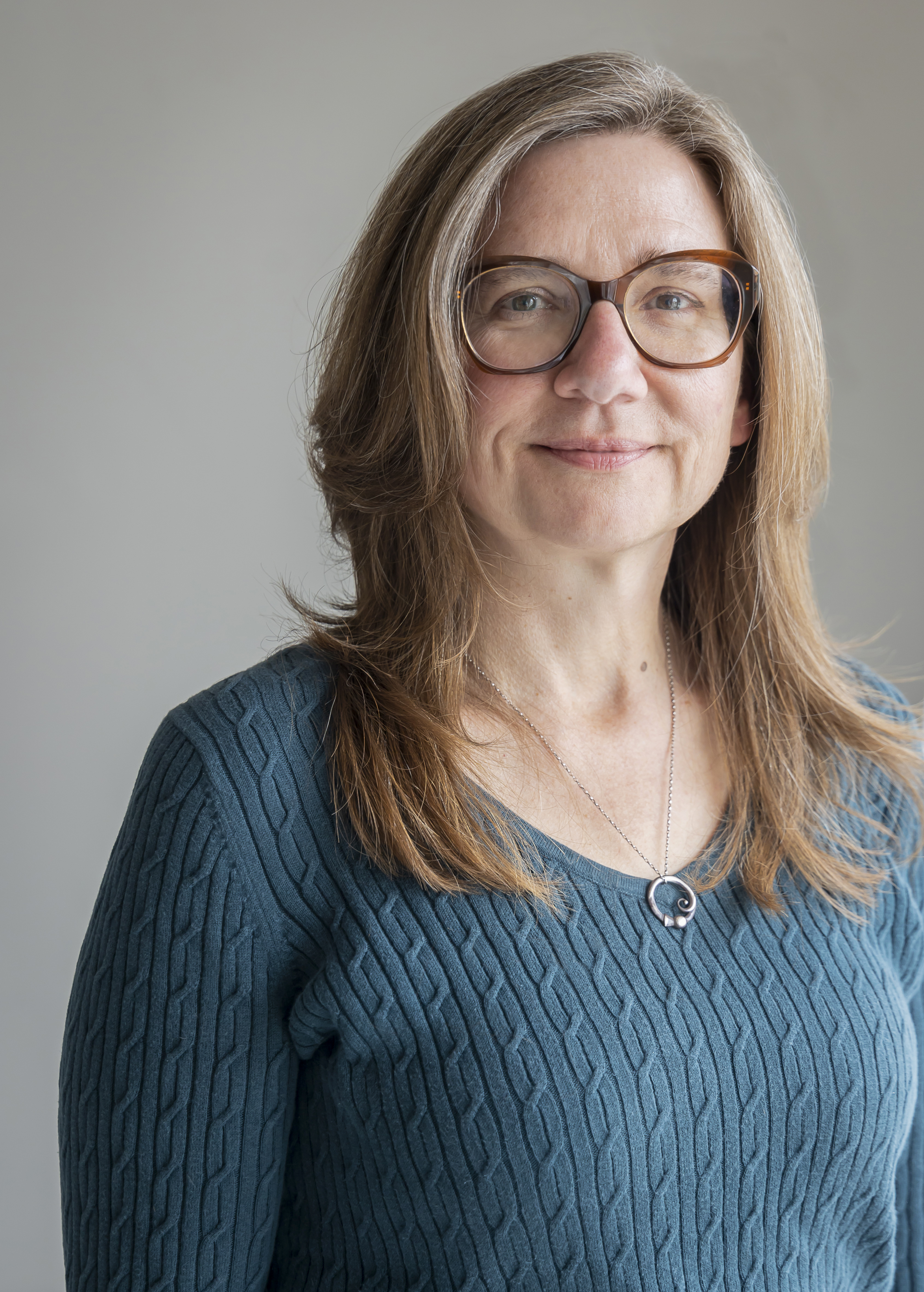
Danielle Dutton’s Prairie, Dresses, Art, Other (Coffee House Press, 2024) is a lively, smart, strange collection of short stories, essays, and hybrid prose pieces. At first glance, the four-part book seems a higgledy-piggledy affair. “Prairie” groups five stories about characters experiencing various anxieties—including climate anxiety—in the vanishing Midwestern prairie. “Dresses” and “Art” each contain a single essay, while “Other” is comprised of eight short genre-defying pieces and one brief play. To hell with readers who like their genres neat. This book is for folks who enjoy playful, associative prose that slides between the realms of fact, wonder, and reflection.
Along with writing and teaching, Dutton runs the feminist press Dorothy, a publishing project, whose list includes the writings of surrealist artist Leonora Carrington, as well as formally inventive work by contemporary writers such as Kate Briggs and Renee Gladman. I became a Dutton fan while reading Margaret the First, her novel about the 17th– century writer Margaret Cavendish. The novel offers narrative immediacy through a mixture of sumptuous imagery and straightforward, declarative sentences, and I was captivated by Dutton’s portrait of a visionary artist whose work and behavior flummoxed and beguiled her contemporaries. A bold, delicious, and thought-provoking book, Margaret the First made me hungry for more such writing that stretched my notions of what a historical novel could be.
Prairie, Dresses, Art, Other similarly stretches notions of genre, demanding that readers pay attention in ways that may not always feel familiar. Attention—and the possibility that paying attention will unsettle you—is one of Dutton’s main subjects here. In “Nocturne,” the story’s main character feels disoriented while staying at her mother’s house: “Several minutes ticked away as she waited for panic to pass. But the sun was clearly rising on the wrong side of that yard. Or else she’d woken back-to-front, and this was what it was like to face the ass-side of your mind.”
I love that blunt, funny phrase: “the ass-side of your mind.” Your mind as shopper trying to see their own ass in the dressing-room mirror. Your mind as dog trying to chew its own tail. The phrase captures something essential about Dutton’s ongoing exploration across her books of the relationship between words and images, between fiction and visual art.
She gives her sensibility explicit expression in the essay “A Picture Held Us Captive.” Dutton begins, “Ostensibly I write novels and stories, yet I often find myself more interested in spaces and things than in plots. The world is astonishing. I want to ask: How might fiction be conceived of as a space within which we attend to the world? A way of opening spaces—prairies, paragraphs, rooms—in which the world can occur? How might a story embody a specific way of looking? By looking I mean seeing, but I also mean a way of being in relation to the world, a politics of attention.”
Here, she tells us what she wants to do; elsewhere in the book, she does it, opening spaces in her fictions that feel at once fresh and familiar because of how she attends to those spaces, drawing our eye to what we might not have noticed before. Take this sentence from “My Wonderful Description of Flowers”: “The street lamps in the mist are wild pearls of light.” Those pearls at once make sense to my eye, while also remaining strange.
Traditionally speaking, one measure of a good story is that it carries the reader (and the characters) forward. It’s propulsive, it has momentum, you’re supposed to want to see what happens and why it happens. You’re meant to read for the what then, the why, the because. As the narrator of “My Wonderful Description” says, “plot is so seductive. You don’t really want it to stop. Or you don’t know how to stop it.” But Dutton’s stories ask us to accept a narrative mode that operates on an associative logic rather than a causative one. Things happen, but it’s not always obvious why. That diminishment of cause-and-effect challenges certain traditional notions of plot, and the reader senses that wherever the story may be going, it won’t wind up in familiar territory. For me, this terra incognita was fun to explore, but I confess I had to re-read the opening stories before I felt I had my bearings. Why? My hunch is that I’ve read plenty of essays that borrow techniques from fiction, and encountered fewer stories that play with the kinds of associative leaps we often see in the essay.
In her stories and essays alike, Dutton juxtaposes the things of our real, physical world—buildings, human-made objects, animals, plants—and the many possible worlds of our imaginations. She talks often about books she has read and art she has seen, so that her writing is frequently in conversation with the work of other writers, philosophers, painters. In this book, the material and the mental exist on the same plane. One’s relations with flowers, prairie grasses, the climate, the strange man on the train; one’s relations with ideas and books and paintings—it’s all equally important and equally worth paying attention to.
More than once Dutton refers to Viktor Shklovsky, the Russian formalist critic, and his essay “Art as Device,” in which he “argues that we perpetually grow habituated to everything around us . . . and that the job of art is to make the world strange so that we might see it again rather than simply recognizing it out of habit. The way art does this is through a process” that has been translated as “defamiliarization.” She quotes him: “Art exists that one may recover the sensation of life . . . it exists to make one feel things.”
When we pay slow, close attention to something—whether it’s an object, an artwork, a book, a feeling, or an experience—the effort can be disorienting. As Dutton shows us again and again in this book, that disorientation can also be dazzling and refreshing. “It is when the world is strange, or when I am awake to its strangeness,” Dutton says, “that I am most compelled to write.” The world is plenty strange these days, and whatever Danielle Dutton is compelled to write, I’m happy to read.
–