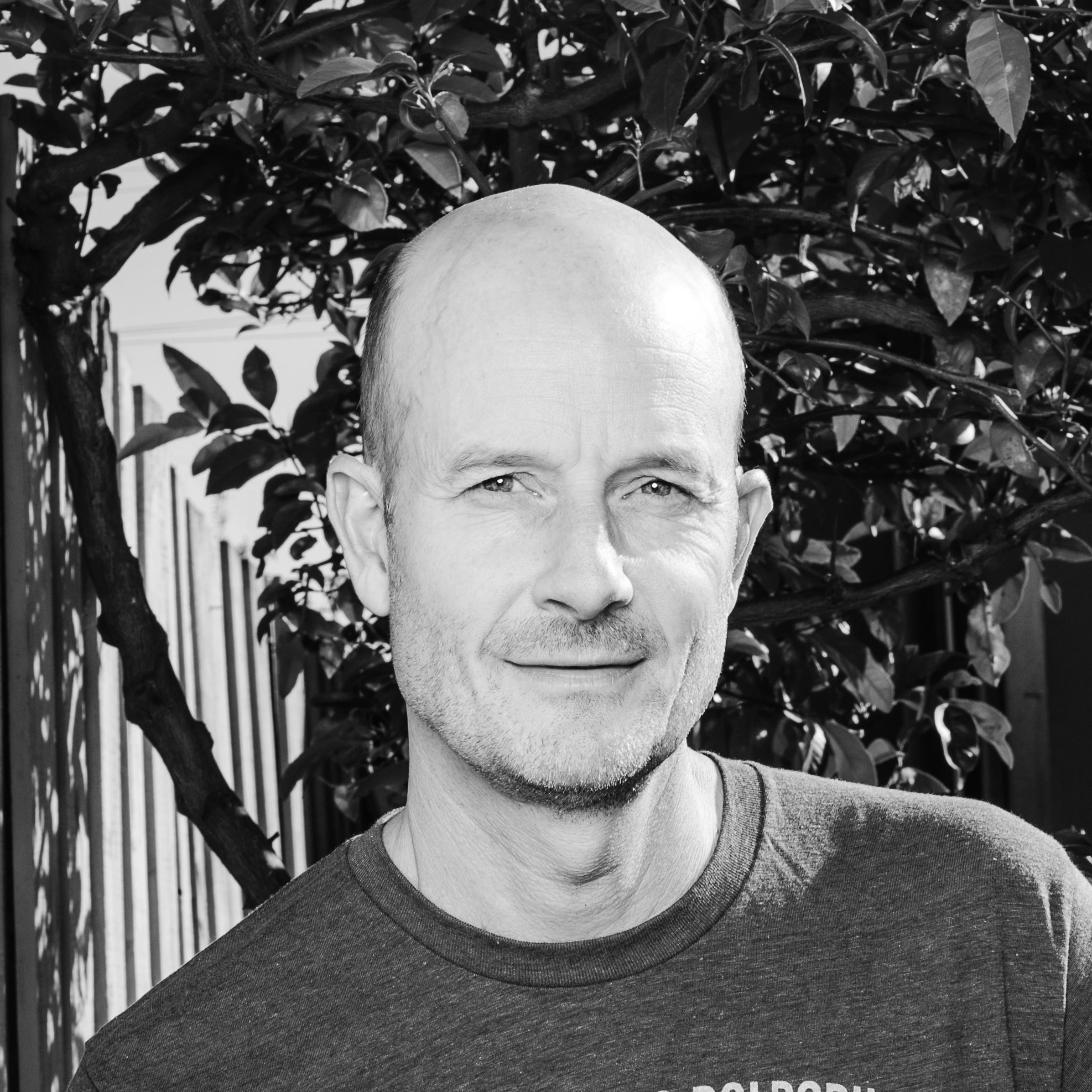
A Conversation with Marianne Chan
BY DAVID RODERICK

Marianne Chan grew up in Stuttgart, Germany, and Lansing, Michigan. She is the author of All Heathens (Sarabande Books, 2020), which was the winner of the 2021 GLCA New Writers Award, and Leaving Biddle City (Sarabande Books, 2024). Her poems have appeared in Poetry, Best American Poetry, New England Review, Kenyon Review, Michigan Quarterly Review, and elsewhere. She is an assistant professor of creative writing at Old Dominion University and teaches poetry in the Warren Wilson College MFA program for Writers.
*
David Roderick: Leaving Biddle City feels like an extension of and departure from your award-winning debut, All Heathens. In this new work you drive deeper into revealing core elements of your personality while also fleshing out, in perhaps a more nuanced or complicated way, your family’s life in suburban, midwestern America. Is that something you were aiming for, or did it organically develop?
Marianne Chan: I did see this book as building upon the themes I explore in All Heathens. Leaving Biddle City has a tighter focus on what it was like for me to grow up in Michigan, but like All Heathens, it’s a book that grapples with Filipino identity and family, and it explores the aspects of our past that we internalize and the parts of our history that we leave behind. In terms of intention, when I started this project, I simply wanted to write about Michigan. I had a picture in my mind that served as inspiration to me, which appears in my poem “Let’s Talk for a Moment.” It’s the image of my father shoveling snow, which propelled this project forward and inspired many of the poems in this collection.
DR: Your book boldly signals that you’re “leaving” Biddle City, and yet the poems are the product of an obsessive treatment of that place. Can you talk about that one word and the meaning it radiates throughout this book?
MC: The word “leaving” is in the title of this collection, and I want to note that “leaving” is a present continuous verb. This, I believe, suggests that the process of leaving is ongoing, incomplete, the speaker trying to leave but never quite getting there, because the places where we are from also exist inside us, and even if we leave them physically, they stay with us for much longer.
As Robert Frost says in “A Servant to Servants,” “The only way out is through.” I think the speaker in this collection cannot leave Biddle City behind without writing it out, without seeing it again, without reimagining it entirely. There’s lots of power in writing things out, in externalizing an experience, in making memories into material for a poem.
The poem that I believe to be the heart of this collection is “Autobiography via Revision,” about the experience my brother and I shared growing up in a mostly white community, and our experiences of racism and racial alienation and what we did to try to make friends in this space. What I internalized from that experience, and from living in white supremacist America, is something that hasn’t left me, or that I’m unable to leave behind. I’m still working to extract it from who I am and how I move through the world.
DR: I was hoping we’d discuss “Autobiography via Revision,” a keystone sequence that addresses your family’s trauma from multiple perspectives, some of them comical. Before diving in, can you gloss, for our audience, the city’s origins, what you’ve been able to piece together? It’s hard to tease out the facts from the mythology, which is richer poetically, I think.
MC: A few years ago, I learned that the origin story of my hometown, Lansing, Michigan, involves two brothers from Lansing, New York. They bought a plot of land in Michigan and called it Biddle City, selling it to the people of Lansing, New York, telling them that there was an actual town there. When the people moved to Michigan, they found they’d been scammed that the plot of land was not a town at all, but in a floodplain underwater. Being curious about this origin story, I looked into it, and I found that the origin story is, in fact, not at all true, and I became interested in these layers of scams, that Biddle City was a myth on multiple levels. It was also a myth to my brother and me. We had been so excited to move there, but our early experiences there were marked by our struggles to find belonging.
DR: This is what I admire so much about “Autobiography via Revision,” and Leaving Biddle City—your skillfully rendered connection between the historical and the personal, how you situate your own family’s story within the context of an American project that’s fluid, apocryphal, absurd, and tragicomic. You attack the subject playfully but fiercely in these eight sections, which all have different forms and angles of approach.
Can you give us a behind-the-scenes look at the poem’s development and tell us a bit about how this sequence was written? I’m guessing there were many sections or scenes left on the cutting room floor, so to speak.
MC: Thank you for this question and for the opportunity to reflect on the development of this poem. I just looked at an older draft of “Autobiography via Revision,” and you’re absolutely right that many scenes, ideas, and reflections were removed from this poem as part of revision. At first, I was writing it in the style of “Autobiography via Screaming” and “Autobiography via Forgetting,” which are prose-y, fragmentary poems that are broken into sections with each section serving as a variation on the theme of forgetting and screaming. This poem was initially made up of various reflections on revision, but even in that earlier draft, I included some exploration of the myth of Biddle City.
DR: Can you remember any key or threshold moments in the process of composition?
MC: Well, as I worked on this poem, I ended up having a long conversation with my older brother to ask him what he remembers during the first two years we lived in the Lansing area. This conversation was transformative for this poem. It changed many of the reflections and scenes. It also changed how I understood that period in our lives. In the end, I also pared it back quite a bit. While the poem still has narrative elements, that prose-y, thinky style becomes more emotive and lyrical, and I decided to lineate the poem to show that the book was moving into new territory.
DR: I’d like to talk about the ending of the sequence, the eighth section:
And we have a lot in common
with the scammed people who came and built a life
in Biddle City. Like them, it was not an America
we expected. I call our hometown “Biddle City”
because the story of Biddle City is ours.
My brother’s story, our memory of it, changed
“with each iteration.”
Biddle City is a town owned and built by us,
the suckers. Now I live somewhere else entirely.
Always moving, Always starting over.
New place. New poem.
You exercise deft control over this complex material, masterfully mapping your family’s story onto the story of every American who is “scammed,” who gets something other than what they expect and maybe feel they deserve. Can you talk about the feelings animating the final two lines of this passage: “Always moving. Always starting over. / New place. New poem.”?
MC: The first part of the poem explores how the speaker never quite learned how to revise. Instead of revising, she wrote new poems, moving on from the poem that wasn’t working. By the end of the poem, she still seems to struggle to revise. She does the same thing. She tries to move on. I guess I wanted to admit to my own avoidant tendencies as a person and as a poet here.
Also, I think that when I wrote this I was thinking a lot about my own movements as an adult. In the past 10 years, I’ve lived in Las Vegas, NV; Chicago, IL; Tallahassee, FL; Cincinnati, OH; and Norfolk, VA. While these movements aren’t explored much in this book, I think this moment in the poem is also commenting on the fact that I’ve had to start over many times in my life. And at this point, I wish I could stay in one place and be the one revising, rather than the one being revised — but that’s a whole other poem I should write one of these days.
DR: Your brother appears in a few sections of “Autobiography via Revision.” In the poem, as well as in real life, he’s a stand-up comedian, someone who is also mining experience for creative material. Despite the stresses of acclimating to American society, you both approach your family experience from a comedic angle. You write, in another section, “I’m a writer. He’s a comedian. / Together my brother and I can revise the story, / we’ve got full control of the laugh track button, / push it whenever we please.” I like the suggestion that you’re both controlling these narratives, you have the final say about shaping their energies and arriving at conclusions.
MC: Yes, an epigraph that I wanted for this book (that we couldn’t get the rights to) was from Kiese Laymon’s Heavy. He writes, “Revised word patterns were revised thought patterns. Revised thought patterns shaped memory.” As artists, I see us as able to reshape our experiences and also our self-perception through our work.
DR: Do you collaborate with your brother on creative activities? Are you involved in each other’s creative projects as sounding boards, co-creators, cheerleaders?
MC: Yes, we are! We read each other’s work. My brother lives in Chicago and is an actor and a writer of fiction and plays. (He actually rarely did stand-up. I call him a “comedian” because of his sketch comedy work!) We share work with each other. We process our lives together. He’s one of my most favorite people in the world.
DR: One of the differences between this new book and your debut, All Heathens, is that many of the new poems are written in prose. I’m wondering if this formal development guided you toward more humor. Some of the prose poems, like “Falling in Love in Biddle City,” “The Biddle City Musical,” and “My Therapist Talks about Biddle City,” sound like they could be comedic bits.
MC: I think this formal development guided me toward strangeness, more than anything. I love prose poems because they conform to the dominant mode of writing while still being poems. Prose is the language of the everyday. It’s in our newspapers, our emails, our social media posts. Prose is functionality. Poetry, on the other hand, is associated with uncertainty and mystery. In my Biddle City prose poems, I wanted to engage with the everyday and defamiliarize it. “Falling in Love in Biddle City” and “The Biddle City Musical” are both pantoums that have been flattened into prose. They’re poems disguising themselves as prose, like a person wearing a fake mustache and glasses. They incorporate ordinary images—snow men, pom-pom hats, choir chairs, middle school theatre auditions—but everything feels a little off, and I love that. I’m proud of how weird these poems get, how they warp my own memories.
But in terms of humor, I wish I were a funnier poet! I think I make attempts at humor in both my books, but I’m not sure I succeed. I wish I could be as funny as Matthew Olzmann or Diane Seuss. Maybe that’ll be what I go for in my next book (assuming it ever gets done).
DR: I have no doubt it will. There’s another thread through this collection that deserves attention, in part because it’s decidedly not funny: the “Biddle City Filipina” poems and “Filipina Universe.” In the notes of Leaving Biddle City, you share that content from these poems emerged from interviews you conducted with other Filipina women living in Michigan, citing that you “wanted to understand their lives more deeply to better understand” your own life. It’s a strategic (or maybe desperate?) way to revise your own experience as an immigrant in America. How did these conversations with other Filipina women inform this book, especially your pursuit of humor and your sense of your own family experience?
MC: Thanks for these questions. “Biddle City Filipina, No. 2” and “Filipina Universe” were some of the later poems I wrote for the book. The first poem I wrote was “Biddle City Filipina, No. 1,” which was a part of an early series of prose pantoums I was writing (which included “Winter Flowers in Biddle City” and “Falling in Love in Biddle City,” among others). After sharing an early draft of this book with friends, a couple of them mentioned that “Biddle City Filipina, No. 1” didn’t seem to fit, that I could maybe take it out for another project. I remember thinking that I’d rather lean into it, to write more toward this idea of a “Biddle City Filipina.” Who is she? Who am I among them? I interviewed three wonderful Filipina women who are a part of my family’s community of Filipinos, and I wanted to merely capture some of their experiences in “Biddle City Filipina, No. 2” and “Filipina Universe.”
It’s funny that you asked about my pursuit of humor in relation to these poems. I didn’t think of these poems as especially funny, but one thing that struck me while interviewing these women was their willingness to laugh at their experiences, some of which were very difficult or scary.
DR: We should probably illustrate for our readers. Here’s an excerpt from the 12-section “Filipina Universe (Biddle City Filipina, No. 4).” The third section opens:
And we move, we migrate, we dance. We wanted
out of poverty. We wrote letters and married men who live across the ocean, who lived in snow.
We rode a plane to be with them. We worried they would kill us. We wore our jeans in bed at night, because that was what the embassy told us to do.
We wore our jeans in bed. We kept our passports in our back pocket.
We were ready to run if something happened, if the men we married were to become killers.
Some of us were given life insurance, our bodies were sent back to the Philippines
because of the husbands we had.
We knew to wear our jeans in bed, hold our passports close.
Our husbands call their friends on the phone I don’t know what to do with my wife, she’s wearing jeans in bed.
We laugh about it now.
We are lucky when our husbands are not killers.
The desperation and absurdity in the passage are prominent—nailed down, I think by your use of repetition throughout this piece. Though these Filipina poems are the most colloquial in Leaving Biddle City, they may also be, thematically, the most complex and ambitious.
MC: Thank you for saying this. I wanted to do something different in these poems. At first, I tried to incorporate these interviews as individual poems in the book. Two of them ended up like this. But in the end, I decided to blend most of the language from the interviews into one poem, “Filipina Universe,” which uses the first person plural, the “we” becoming one contracting and expanding perspective.
I liked seeing my speaker’s voice connected with these other voices through this pronoun. I also liked the idea that these speakers are speaking together as a kind of chorus, absorbing each other’s stories, creating a kind of home in their joining together.