
A CONVERSATION WITH MAYA C. POPA
By LEIGH LUCAS

Maya C. Popa is the author of three poetry collections: If You Love That Lady (W. W. Norton, 2026), Wound Is the Origin of Wonder (W. W. Norton, 2022), named one of The Guardian’s best poetry books, and American Faith (Sarabande, 2019), winner of the North American Book Prize. Her writing has appeared in The New Yorker, The Atlantic, The Paris Review, Poetry, and elsewhere. She has created commissioned works for the United Nations and Van Cleef & Arpels, among other organizations. Popa is the Poetry Editor of Publishers Weekly and founder of Conscious Writers Collective, a literary program serving more than 400 writers worldwide.
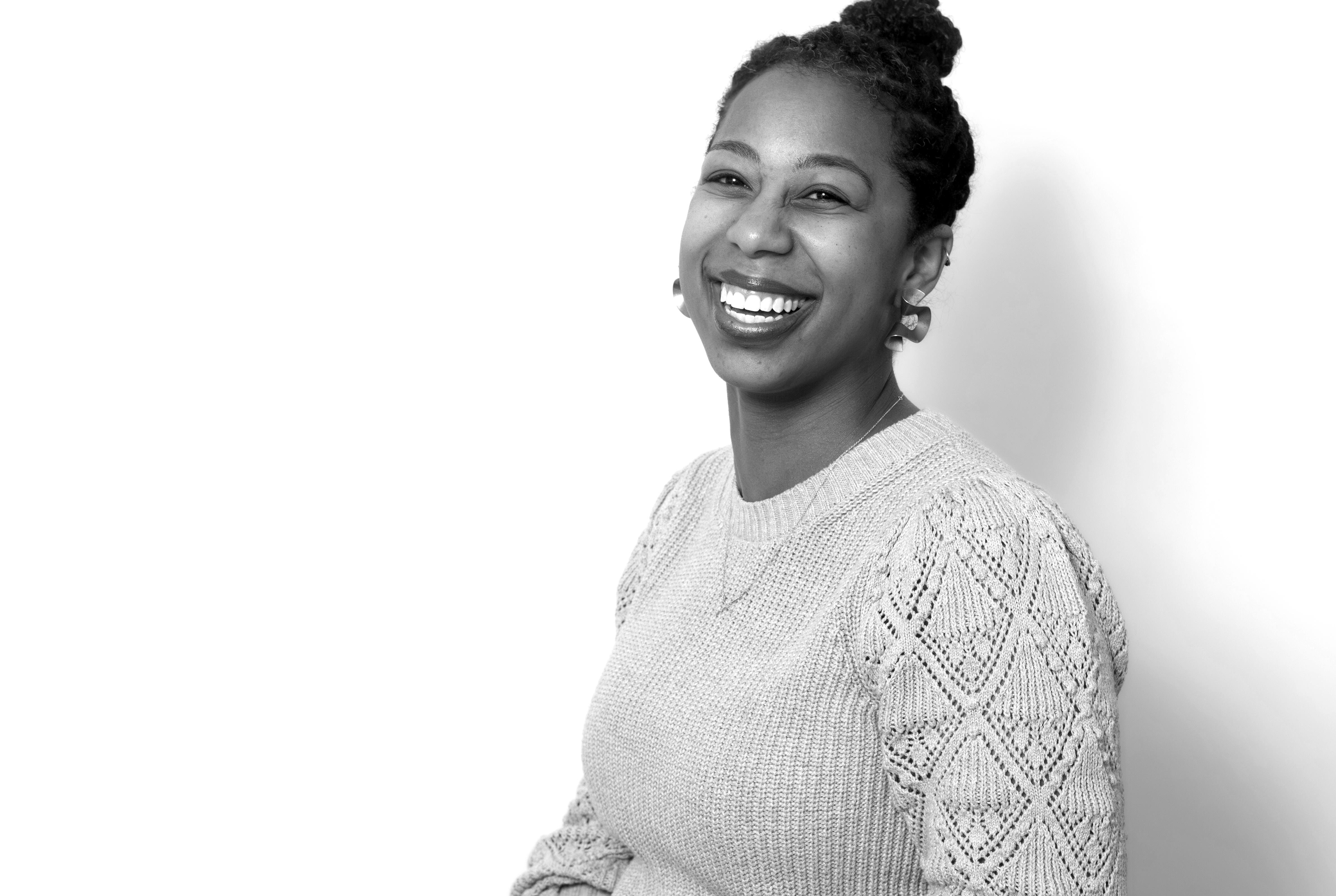
Leigh Lucas: It has been such a joy to pore over your fabulous, most recent book, If You Love That Lady. It feels very fitting that the style of this interview itself is epistolary, in a way, given the book’s interest in the practice of letter writing.
This book opens with a quote from a letter Emily Dickinson sent to Thomas Wentworth Higginson in 1862: “Are you too deeply occupied to say if my verse is alive? The Mind is so near itself—it cannot see, distinctly—and I have none to ask.” So many of the book’s themes present themselves in this epigraph, on which I would love to hear your thoughts. But first I can’t help but ask, do you think Emily’s question is sincere?
Maya Popa: I was at McNally Jackson last night reading with Pádraig O’Tuama, who just released his wonderful Love Between Men. I asked the kind and dedicated folks who showed up to South Street Seaport hours before a Nor’easter if they could, in our era of nonstop contact, imagine waiting days or weeks for the reply to a question as loaded as “is my verse alive?” Someone—I think it may have been Marie Howe—called out, “she knew it was.” Which, I think, reflects what you’re suggesting, that the query might have been gently performative. Although we do rely on encouragement and support from one another, that need is so genuine that it ought to be recognized with tenderness. One can be confident and still hope for and seek out that confirmation and bonding of readership.
But the phrase, “verse alive,” is so memorable and apt. It reminds me of what Pound would later say about the role of form being to deliver content “and deliver it alive.” Dickinson isn’t asking “Am I any good?” though that’s the implication. Her phrasing reinforces what matters most to her, which is that sense of the mind’s aliveness on the page. Or else the vitality and psychic subtlety that we all know and associate with her writing.
LL: “If You Love That Lady” (“No reason could unseat him…”) feels to me like it could have been the first poem you wrote for this collection, or the poem that inspired the themes that would cohere this collection. The epigraph is present (“Like asking is my verse alive / and waiting leaded days for the reply”) as well as one of Dickinson’s other poignant lines (“the formal // feeling after great pain”). Was this an early poem? Was it a north star for your collection? I’d love to hear you characterize your deep questions and thematic concerns for this book.
MP: It’s an interesting question, because I don’t often remember the order in which poems were completed since the process continues to be mysterious to me, which is a good thing. More often I think they are “finished” in layers—I’ll reread a draft and hear the next line or glean the place where the poem is interested in going that its current logic is preventing. Then I’ll rewrite the draft entirely or cut away a large portion and try to re-enter that generative mode to revise in the true sense of re-seeing, or seeing again, drawing from what remains. I will hopefully get a little closer to what I’m only now realizing I was trying to look at closely, but that was being overshadowed by the columns of language around it. The “If You Love That Lady” sequence is a good example of this process. I like sequence poems in general for the way they seem to work by accumulation, while the couplet still demands a kind of precision. It’s also, I think, the poem most interested in the role that delay plays in desire, which is a central question in the book.
LL: “One Way or Another” is a palindrome poem, and such a charming and successful one. I’ve heard you describe this poem as giving the impression of “a snake swallowing its own tail.” Tell me about this form, where you first encountered it, why it makes for such an inevitable container for this particular subject.
MP: Thank you so much, Leigh. It’s a bit of a magic trick. You’re retracing your steps through everything you just said, and yet the reader ideally still feels like they’ve arrived at some strange new place by the end.
With greater distance from the manuscript, I can see now just how many poems are interested in in-between places—highways, Eden, streets connecting major pathways. Places where one cannot permanently remain. At the time, and as you know, being a wonderful poet yourself, we mostly work by intuition (which itself, I should say, has been informed and shaped by years of reading and studying and attempting and failing, etc.). Over time, I think I’ve also become less prescriptive and more willing to just do something on the page—it may not lead to anything I will ultimately keep or include in a book, but it might relieve the poem of feeling too constrained by a pre-existing meaning or direction I’d anticipated when I first sat down to write (and which, ultimately and often, no longer fits the poem).
I think the reason we’re intrigued by palindrome poems is that they seem to be answering an underlying psychic demand. They’re not progressing towards a linear conclusion but returning to the beginning (the word palindrome, from the ancient Greek, means again and direction), which I think makes the reader question both the poetic subject and the author’s state of mind. In some way, it has that same obsessive circling the villanelle and other strict forms deliver, and which have been linked to the elegy, since grief and repetition go hand in hand.
But I should say that I did not set out to write a palindrome—it happened midway through, when I recognized there was nothing left to say but what I’d just said, and that this, in fact, would enact that Herodotus line the opening plays on about never stepping in the same river twice.
LL: Syntax might be the most complex and dynamic element of craft in poetry. Are there specific poets you read who inspire your interest in syntax? Do you tinker with the order of phrasing in your sentences in revision, or do you generally conceive of your poems with sentence units already built that you simply arrange or accrue? I couldn’t help but picture you working as referenced in this l passage of Nabokov’s from The Real Life of Sebastian Knight: “‘As he a heavy, a heavy sleeper, Roger Rogerson, old Rogerson bought old Rogers bought, so afraid Being a heavy sleeper, old Rogers was so afraid of missing to-morrows. He was a heavy sleeper….’” What does your line construction process look like?
MP: I love that passage! I have a visceral reaction to complex or inverted syntax. I love it. My mentor at Barnard, Saskia Hamilton, asked us to reproduce the opening of Paradise Lost from memory for our final exam. We then had to scan those sixteen or so lines. It was wonderful. I taught a class on the Old Testament a few years ago and relished all the inversions and chiasmus there too. But my favorite poet, Philip Larkin, does wonderfully subtle, sly things with syntax too.
LL: “The World Was All Before Them” is a very sexy poem. The line “that look you give me like nothing / other than my throat will do” gives me chills. It also feels a little subversive with so much Biblical imagery. And of course its ending is what I’m sure people ask you about the most. (“You have made me an Eden… / Eden / by which I mean, you will leave me”). Will you tell us more about the making of this poem?
MP: I was reading Karen ní Mheallaigh’s The Moon in the Greek and Roman Imagination, which is where I learned about the Thessalian trick, an optical illusion performed by Thessalian witches who would draw down the moon, presumably for the purposes of avoiding paying interest on debts determined by the lunar phase. I was in Athens—I know, this is too much—and wrote a terrible poem that incorporated that conceit as well as many others I loved from extraordinarily on-the-nose reading. Like anything that begins with an oversaturation of almost stereotypically poetic material, it didn’t work. At all. There was too much I was genuinely fascinated by and wanted to share with the reader that I didn’t have any stake—I wasn’t a consciousness situated within or through the material. I should really just have updated the Wikipedia article on it or something.
Years later, I was working on this sonnet-like poem when I remembered the Thessalian trick and found it was exactly the spirit of negotiation and manipulation I wanted to introduce in that moment. And I was not at all worried that a reader might not know the historical basis for the line, because the image of drawing down a moon with string was appealing to me and echoed with the white of the ostrich plumes and the power dynamics introduced by the emperor.
But I’ll also say that this poem is an example of one where darlings had to be systematically killed off—and at one point, I had too many similes and images that were all doing the exact same thing, thereby diluting the poem’s sense of argument. Disrobing a sexy poem of some of those additional unnecessary images helped.
LL: Reading your work feels a bit like receiving a little map of your varied influences, the poets you’re in conversation with, the source material that sparked your art. Your reader gets to dig through a few shelves of your bookcase, and the material is varied and vast. Tell me about how you see sources of inspiration. Do these texts find you and the poems surprise you? Do you read in order to discover material for poetry?
MP: I’m so glad it feels this way, because these are texts that, even if I haven’t revisited them in years, are a part of my mind’s architecture. I feel as though I have a relationship with them, yes, but also with the versions of them as translated through the minds of my teachers—which is really a wonderful thing. I remember Saskia Hamilton teaching me Mandelstam, Clare, Zagajewski. I hear her voice reading the poems to me. They are like spots of time, vessels of extraordinarily precious experience. I want the poets and poems that have kept me company to exist in my own poems.
I don’t read to find material for poetry, though if something in my reading naturally catches my attention, I’ll often write it down. I did have an overflow of intriguing materials from studying the subject of wonder for my PhD. For instance, an article I’d read on animal trials in the medieval ages inspired the poem “Trial of the Mayfly.” A visit with Jamie McKendrick in Oxford, in which he casually quoted “sounds / Of undistinguishable motion, steps / Almost as silent as the turf they trod” from Wordsworth’s Prelude is at the heart of the poem the “The English Line” (which plays on the roughly ten syllable line Shakespeare, Milton, Wordsworth and company wrote in, as well as the idea of tradition or lineage).
It is usually a quiet line that draws my attention, a moment that seems almost designed to be missed. That kind of unassuming but alert attentiveness is at the heart of one of my all-time favorite poems, “Adelstrop” by Edward Thomas, in which, on the surface, nothing happens. So, I think it’s fair to say that this is a sensibility or quality that makes writing memorable to me.
LL: While things have improved since Dickinson’s time, I couldn’t help but see the parallels in her experience and yours in the wake of publishing this book. I was wondering if you’d have any interest in commenting on your experience with responses to If You Love That Lady or how you have observed gendered criticism come into play in the poetry world today.
MP: I do think women writers still encounter a difficult double bind. In general, I’m wary of the term “feminine” appearing within an argument about the supposed limitations of “emotional” and “accessible” poetry and the recurring dismissal of women poets (chief among them Mary Oliver) based on that accessibility or interest in beauty or nature. Critics can find a poem simplistic or unconvincing, but those judgments need to be explicated thoughtfully, with particular attention to the language used to characterize the work and its historical implications.
I also think we should be able to examine the assumptions underlying a critical argument without that examination being mistaken for sour grapes or a demand for praise. Unfortunately for women, questioning those assumptions is often taken as proof of oversensitivity or an inability to tolerate criticism. I recently questioned the gendered assumptions within the framing of a review and received a volley of outright hateful and misogynistic comments, accusations of being nothing more than a “girlie diarist man-hater,” etc. I don’t know a single woman, really, who hasn’t dealt with some version of this, and I count myself extraordinarily lucky to have received tremendous support and advice from fellow writers. I also deeply admire critics such as Anahid Nersessian, Merve Emre, Parul Sehgal, and Roxane Gay, whose writing on literature demonstrates how rigorous, surprising, and intelligent criticism can be.
LL: You were the guest curator for Poem-a-Day last month (September 2026), and you chose only works in English translation to align with National Translation Month. Would you tell us more about the research you undertook to select those 22 poems (one for each weekday of the month). You clearly considered a wide variety of languages and aesthetic sensibilities.
MP: Thanks so much for asking about this. It was tremendously exciting to get to solicit work translated into English. Romanian remains the language that I speak at home, and I attended a French language school until I was fourteen, where I also studied Italian. In college, I briefly studied Icelandic, which was about as complex as the Elvish I tried to learn after a Lord of the Rings obsession in Middle School (yes, I had a Quenya dictionary; no, I did not get far in my studies).
While at school in England, I was very lucky to study with three fantastic poet-translators: Jamie McKendrick, Jenny Lewis, and Jane Draycott. Jane introduced me to Zoran Anchevski’s poem “Translation,” in which the translator sleeps “on a pillow of someone else’s dreams.” I think about that image all the time in regard to translation. It echoes Walter Benjamin’s idea that the translator releases, in his own language, that “language that is under the spell of another.” Umberto Eco called translation “the art of failure.” It’s a field whose critical perspectives are fantastically diverse, and I love hearing poets talk about the work of translation, even though I have yet to seriously undertake a translation project myself.
Curating a roundup of translation was a fascinating learning experience. Translators are sometimes working in more than one language, or on more than one project at a time, so I often found myself choosing among three poems in three different languages. To make my selections for the month, I thought about the spread of languages, regions, and aesthetic sensibilities, and listened for what each poem delivered (without, in the majority of cases, being able to read the originals). It’s worth noting the kind of trust that translation engenders, too, on so many levels. In the end, the variety was astonishing—ancient poems from Old Irish and Old French, as well as Persian, Arabic, Brak Bhasha, Catalan, Japanese, Portuguese, Spanish, Ojibwe, Swedish, Macedonian, German, and Russian, among others. And it was a true delight to see writers whose work I’m familiar with and admire in English sounding both like themselves and not like themselves in their translations.
LL: For those of us who aren’t there yet, tell us what, if anything, feels different about the third full-length than a second or a first. What is your aim for your work? Did this book have any specific aspirations attached to it? What place it might occupy in poetry? Who it might reach? Who it might touch?
MP: The first book is most often a miscellany of everything one has labored on for the years leading up to the book’s completion. This sometimes means decades of writing, which, I think, makes the debut particularly challenging. In my case, it took years of culling, years of gaining the head of a smart stranger, as Zadie Smith says, so that I could hear the book’s throughline. My second was unusual in that it was written in a compressed period during the pandemic lockdown. There’s no way, really, to replicate the hours I could dedicate to reading and writing daily—nor would I ever want to return to that rhythm.
I think the best thing that could happen to anything I write is that it be read by someone who feels it kept them in good company. My other hope is that it would make another writer want to write. I remember reading collections—not necessarily books that I even enjoyed or ended up entering my personal canon—that energized or lit up my brain and drove me to the page. So, the thought that someone might have renewed energy to work on their own writing is a lovely thought.
My own aspirations long-term are entirely self-directed. They relate to a feeling of pushing the thinking and precision as far as I can, which often means aiming for greater clarity and simplicity without making the writing anemic. I do think this third book is my strongest writing, and I’m proud because I know how much I wrestled with false starts and approaches to get it to this place. The joy, of course, was in the effort. I’m always profoundly grateful to anyone who engages with my work at all. It never stops being extraordinary to me.

Leigh Lucas is the author of Splashed Things (Boa Editions, 2026), winner of the A. Poulin Jr. Prize and the Golden Poppy Award, and Landsickness (Tupelo Press, 2024) winner of the 2023 Sunken Garden Poetry Chapbook Award. Leigh’s writing can be found in Academy of American Poets’ Poem-a-Day, Poetry Society of America, Literary Hub, and elsewhere. She holds a BA from Stanford and an MFA from Warren Wilson. She lives in San Francisco.
Next (A Conversation with Jim Whiteside) >
< Previous (A Conversation with Chet’la Sebree)