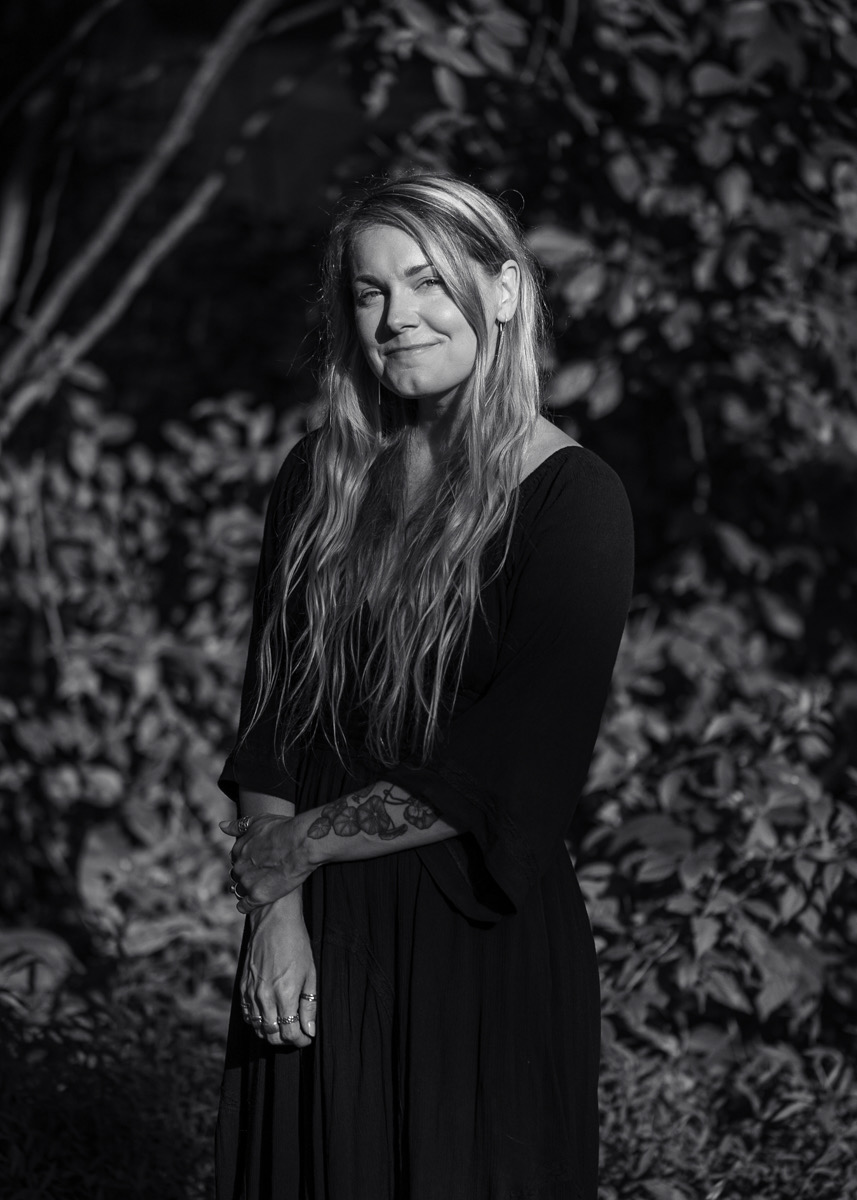
David Biespiel is a poet, novelist, critic, memoirist, and painter. The author of over twelve books, he is a contributor to The New Yorker, The New Republic, Poetry, American Poetry Review, and elsewhere, and the recipient of a National Endowment for the Arts fellowship, Lannan fellowship, two Oregon Book Awards, and has been a finalist for the National Book Critics Circle Balakian award. He lives in Portland, Oregon.
I met David Biespiel in 2009 at Wake Forest University where he taught my first undergraduate poetry workshop. From those early workshop days to the publication of my first book, I’ve been lucky to have David as a teacher and mentor throughout my writing career. I was grateful to conduct this interview about his forthcoming collection, Beautiful the World: New and Selected Poems, out this September from Unbound Edition Press.
***
Mackenzie Kozak: Thank you so much, David, for being willing to answer some questions about your latest collection, Beautiful is the World: New and Selected Poems. In reading this expansive and luminous collection, encompassing 30 years of your work, I find myself interested in its construction. What was your approach to the initial structuring of this collection?
David Biespiel: The first approach was re-reading the books. Will it surprise you to hear that I hadn’t read the poems in any of the books, really, since they were published? Other than for public readings at the time. The experience was like pawing through a dark hallway, say, the hallway of your childhood house, but doing so decades later. You recognize vaguely the hallway in your body, in your spirit, memory, but it’s been a while. As you feel your way over the flooring, inside the walls, crossing thresholds, minding the banister, and so on, it feels both strange and deeply familiar, bizarrely other, while also rooted, grounding. Sometimes I was surprised to find a poem still resonated with me, emotionally or as an artifact. Other times, a poem seemed foreign. Did I write this?
And then, too: I have a terrible bias, a cranky partiality, in favor of Selected Poems that are slender. With my editor Peter Campion, we agreed to aim for something tighter, something that might evolve into a new, cohesive volume. To begin with, I decided I’d only include eight or nine poems from each book. Or I’d compensate: four from one and ten from another, and so on. What I discovered was that by being highly selective, poems from across decades began, in my view, at least, to echo-locate in new ways. If Beautiful Is the World works—in this regard, that is—it’s because, again in my view, it feels like a fresh book, not some dusty retrospective. At least, I hope so. Across all the different forms that the books inhabit, a single consciousness remains, I can see that—for good and for ill, I mean. I can see, too: the earliest poems from Shattering Air have a lot in common with the newest poems that open the book.
As for ordering? I found I wanted to highlight the connections, so it seemed logical to begin with the newest poems then turn to the earliest, from waking, as in “Waking Early” to “step[ping] over what comes under our feet” at the conclusion of the poems drawn from Republic Café. The volume, I hope, is an arc, a performance of consciousness—inside poems, over time—and also a single book representing qualities of a single consciousness.
MK: Your book’s title, Beautiful Is the World, comes from a poem by Yehuda Amichai, two lines of which serve as the collection’s epigraph: “Beautiful is the world that wakes up early for evil, / beautiful is the world that falls asleep to sin and mercy…” As this book is being published at a time when many of us may be struggling with the state of our world, how does this title and its message connect to your new and selected work? And how do you see this particular collection in conversation with Amichai?
DB: Yes, the days and nights are distressing. Aren’t they? Civic, partisan compromises at the federal government are being murdered by crooks, felons, immoralists, malefactors, and opportunists. Across the world—it feels we are on the precipice of something catastrophic. Climate change and its global impact, economic disparities, deteriorating trade relations, political instability across regions and across continents, the rise of extremism and authoritarianism, wars bleeding into other wars, migration, the disruption of democracy, shifting international alliances, human rights abuses, social justice movements under attack, uncertainty about the future of daily life, health care, and labor.
And so, you’re asking: why “beautiful is the world?” And, why Yehuda Amichai? Well, in the house I grew up in, a nearly Orthodox Jewish household in Texas, we had two non-liturgical books of poetry on our bookshelves. The Golden Treasury, edited by Oscar Williams. And a bilingual edition called Poems by Yehuda Amichai, translated by Assia Gutmann. That little Amichai edition, which I read often, meant a lot to me as a young reader of poems interested, as Amichai is also interested, in poems that undercut authority, political rhetoric, and religious faith. Plus, his poems are full of exhilaration—especially the love poems.
Too, his poems are sweetly mystical—about human limitation and aspiration. He’s both a love poet and a moralist. Look at the opening of “Half the People in the World,” published in 1958 (this is the Bloch and Mitchell translation which I prefer above others):
Half the people in the world
love the other half,
half the people
hate the other half.
Must I because of this half and that half
go wandering and changing ceaselessly
like rain in its cycle,
must I sleep among rocks,
and grow rugged like the trunks of olive trees,
and hear the moon barking at me,
and camouflage my love with worries,
and sprout like frightened grass between the railroad tracks,
and live underground like a mole,
and remain with roots and not with branches,
and not feel my cheek against the cheek of angels,
and love in the first cave,
and marry my wife beneath a canopy
of beams that support the earth,
and act out my death, always
till the last breath and the last
words and without ever understanding,
and put flagpoles on top of my house
and a bomb shelter underneath. And go out on roads
made only for returning and go through
all the appalling stations—
cat, stick, fire, water, butcher,
between the kid and the angel of death?
This catalogue concludes with Amichai’s questioning where he should position himself “between such well-matched halves.” But location, per se, is not Amichai’s primary interest. Sanctification is, which he venerates with the extravagant, painful image of a young girl waving her “kerchief, beside the [burial] mound.” Here’s the ending:
Half the people love,
half the people hate.
And where is my place between such well-matched halves,
and through what crack will I see
the white housing projects of my dreams
and the barefoot runners on the sands
or, at least, the waving
of a girl’s kerchief, beside the mound?
I continue to be taken, when I read Amichai, by this balancing formulation: beauty and evil, sin and mercy. My conversation with him, as in the poem “Hotel du War,” which comes early in Beautiful Is the World, one of the new poems, is more camaraderie than conversation, although the poem acts like a small play.
Like Amichai, I feel an affinity for a poetry against absolutes, which, in this current literary climate, might make one’s work appear subversive. Amichai—far from portraying himself as the object of reverence by his fellow citizens—is constantly bringing himself up short in favor of his astonishment at the generosity of existence. Torn souls are still seen as beautiful. The scent of orange groves lingers forever in the houses that have replaced them. Former lovers mourn the same man killed in war. The knapsack on the back of a man in the marketplace resembles the folded parachutes soldiers carry to leap from airplanes. And his Jerusalem is emblematic of the many passages of human experience.
When I look at what I’ve written over the last thirty years, the tension between beauty and travail, love and trouble, comely and grotesque, charming and repulsive, harmonious and shattering, and so on and so on, for better or for worse, seems, to me, at least, ubiquitous across the decades of my poems—certainly, there’s a tussle there, rough-and-tumble, a scrap, a tautness, a strain. It’s not that I intend it; it’s just my view of existence.
Still, I wanted this book to take a side—the side of beauty, if barely. That is to say, within a context of all the rest. As Amichai says, “Beautiful is the world that wakes up early for evil / beautiful is the world that falls asleep to sin and mercy…” This is not blind naiveté. We are going to have to overcome something that appears to be horrific in the offing in our times right now, historically speaking, and so we must—while fighting for justice and peace, for fairness and loving kindness, for freedom and respect—be seeding a future welcoming to the inner life, to myth, to metaphor. I mean, if the new Republic we all want to come to fruition doesn’t include considerable space for the inner life, for interiority, for poetry, for joy, love and the failures of love, that’s not a republic I want to live in either. Some poets feel the need to examine the public life, other poets feel the need to examine the inner life. I have been both, both at once—and both responses to living ask a poet to hold difficulty and joy in a balance that can only be called imbalance—in a phrase, “Beautiful is the world.”
Put another way: that which we perceive of our everyday experience is only an inkling of what is really there, only an inkling of what gives a thing, an experience, and so on, its meaning—if it even has meaning. We are the meaning. Each of us has meaning. We bring that to life. There are dimensions of experience not included in our concept of them. The same, I suppose, might be said of oneself.
MK: I appreciate this encouraging and authentic perspective, this attempt to take “the side of beauty, if barely.” You mentioned “Hotel Du War,” which is one of my favorites of the new poems; it introduces this strange dreamscape of the speaker and Amichai over drinks, conversing about death, time, the afterlife. “‘And yet / We live and die inside a flash,’ I said. ‘Minutes,’ you said.’” In your earlier work, as well, there’s this haunting presence of the passage of time, the inevitability of it, sometimes the speed of it, sometimes the surprise of it. In Shattering Air, your very first collection, you have the poem “Tower,” a story of youth hovering so close to death without even realizing it, until they are suddenly faced with it, and in “What Gifts of Love or Quiet Joy,” the speaker says, “I, too, will come to know worm or flame, / I’ll leave no trace but the tongue, sponged / And cleaned…” In The Book of Men and Women, we read “Citizen Dave,” which says, “The sight of the sun going down leaves him strangely overjoyed. / He’s a goner, tapered, setting out for silence, and no good.” In Charming Gardeners, “To _______ From the Jewish Cemetery in Williamson, West Virginia,” after a sprawling account of community and history and geography, the speaker says:
I keep looking because I know I’ll never get back here.
It’s like dying, done once with the tremor of a wound,
A carving, an inscription of the forehead,
A last letter for all the abominations done in the midst.
And in your most recent collection, Republic Café, we’re halted by one of your gorgeous fragments: “In the ruin of a human heart, you say, a heart will rot like a piece of fruit.” All this, and I’m wondering about the development of your views on the passage of time as expressed through your work. In considering the poems in this collection, do you see a shift in your perspective on time? Or has it been a less-than-linear exploration?
DB: It’s amazing, you asking this question: by coincidence, I’m working on something now in prose that goes: “We serve time. We mark it. Time invites us to pass through it. That’s what our lives are. Unlike everything else, time goes in one direction. We just try to concentrate on the details of our lives. Best anyone can try. Those we love come and go. We don’t have all the time in the world to get to where we’re going.”
I suppose that unpublished passage might summarize my feeling about time—at least right now, or at least in that passage. Of the progression you’re identifying, the first reckoning with time, in “Tower,” might be too youthfully simple (my writing, not your identification), or simplistic: only a crisis could bring death, or near-death. The Amichai sequence in this new book recognizes, I can see, something else: life is brief regardless. We’re not alive all that long, I’m saying. The same, I suppose, holds for time inside a poem. That’s the lyric problem of time, I mean. I believe in the limitation of time inside a poem. More so, form imposes certain restrictions on time. I also believe, on the other hand, that if one insists too much on this proposition, if a poet hews too closely to linear logic, or chronological narrative that is so obvious there’s no escaping it, the result would be offensive to our elemental understanding in the multiplicity of time that’s swirling in our consciousness and our spirit at all times—should we be alert to it, that is. In a poem, you have the opportunity to re-order time, re-sequence it—as in the expression, lyric time, in which you have, in between chronological time, a psychic space in which past, future, and present are phasing in and out continuously, disrobing logic, into illogic, dream, fantasy, memory, projection, and things still too mysterious to name.
I like to think a clear concentration on form lets a poet be free as possible with time, insofar as, well… orchestrating time in a poem goes. All in all, I like to think my poems tell the story that a life, or an autobiography, is that which we pass through. As in a poem, in life we mark the occasion associated with a certain time, or what Stan Plumly used to call “the occasion of the non-occasion” associated with a multiplicity of times. Time haunts us. It is endless, fractional, and finite all at once. It is unfathomable, and yet it also, like a keepsake, fits in the palm of your hand.
MK: You mention that form imposes certain restrictions on time, and form, by its very nature, is a type of chosen restriction of language. This exploration of form is something that’s been of interest to me throughout your collected work; we’re being guided through these periods of obsession, which take different shapes: your collection of epistolary poems, your nine-line American sonnets, your fourteen-line American sonnets, your sequence of fifty-four numbered sections/fragments, and within your new poems, the five-part sixteen-line sequence. What has your journey with form looked like in terms of these manuscripts, and how did you decide what kinds of constraints to enter into next?
DB: Form can be a restriction on language, yes. But also, in my view, its more potent energy is that of being a release, an unfastening, or loosening, perhaps even an emancipation. I’m of the school of poets that feels form is everything. Content is, if not irrelevant, then inevitable. But, form is the force of the art in relation to the poet. And form begins with assonance and consonance. With syllables and stresses, with the line, with stanzas, with patterns generally… Everything else is an outcome. The ur-syllable relationship in poetry in English is the iamb. It’s hard to refute that. The ur-line is blank verse. If it’s not a ten-count line or a five-foot line, then a line is either longer than or shorter than a blank verse template. Seems to me these points are compositional fundamentals, is all. And then one builds from there. Whether one is cognizant of this or not, it’s happening in your poems as you write. You have to make form your friend. You have to let the art in—and when you do, it helps your poem.
So, I have to begin there. From before the years I was in graduate school, form was utmost in my attention, if only asking the poems I was reading in the Norton anthology and contemporary volumes: how is this thing put together? The observations you’re making about my poems please me, therefore. At the same time, I’m aware that those very formal obsessions represent the limitations of my imagination, talent, and devotions, too. And yet, if an epistolary poem is good enough for Horace or Hugo, it’s good enough for me. If a love poem is good enough for Catullus and Rich, it’s good enough for me. If thinking in lyric fragments is good enough for Wordsworth and Dickinson, it’s good enough for me. If fashioning sonnets is good enough for Herbert and Heaney, it’s good enough for me. In all, my ally is form. A powerful ally it is.
MK: I can’t believe we’re already at the final question, but I wanted to end with a beginning: Where do you go from here, now that Beautiful Is the World is out in the world? What are you working on now?
DB: Well, it’s the same as ever: one poem at a time. I have a fistful of new poems, I suppose. One called “Robinhill,” which is the name of our house. Another called “What Kind of Times Are These,” which comes from something by Adrienne Rich—I’d thought I’d write more overtly political, or something geared toward the title, but almost immediately the poem veered into elegy, or a memory of my father in his navy dress white uniform. Another poem called “After Rothko,” the painter. I read a biography of him—he lived in Portland as a kid—and he’s a very unlikeable man, I’m afraid to report. Another called “The Many Deaths of Robert Bly,” which truly gets back to the beginning of the beginning for me. Robert’s poems were some of the first that steered me into my own material. I read him more often now than I have for some years. So, I guess I haven’t changed much. Have I? One word at a time, is all.
***