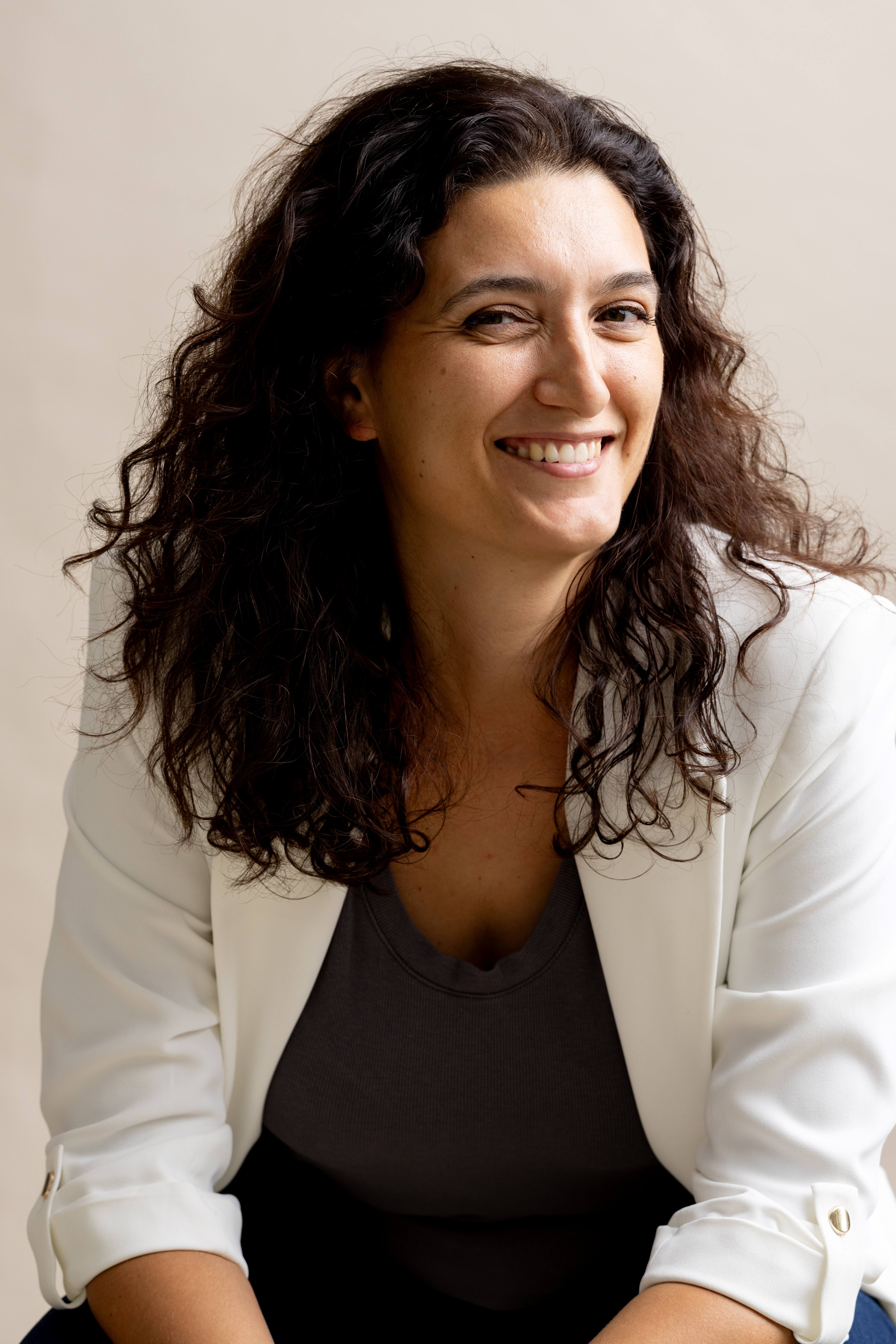
I have admired Elisa’s evocative prose and intimate stories ever since I discovered Winter in Sokcho in French at my hometown local bookstore while on vacation in France. Ten years later, it is an honor to talk to her for the American release of her latest novel, The Old Fire, translated into English by Aneesa Abbas Higgins.
This interview was conducted in French over video chat and translated by the interviewer.
*
Sophie Hamel: The Old Fire tells the story of two sisters, one mute since she was six years old, the other a screenwriter who struggles to express herself, as they get together for the first time in a decade to empty their family home following their father’s death. The story is set as a huis clos, a story behind closed doors, that the sisters imposed on themselves out of filial duty. Could you walk me through the genesis of this story?
Elisa Shua Dusapin: Each book emerges from what I feel I didn’t really succeed in doing in the previous book, and after three books, I realized that my narrators were all women who were only children, when in real life, I have three younger sisters. I wondered why I couldn’t integrate this in my stories. I understood that the subject was too big for me not to make it central.
At the beginning, I wanted the story to be about a violinist and her teacher in New York with, vaguely, a little sister who came to visit, so really something else! There are still traces of New York in the background, but as I was writing, I realized that New York was a city too effervescent for something that started to shape as a huis clos as you mentioned. The story of the two sisters was taking up more space. I needed to focus on something more intimate. At that time, I was invited to a festival in Dordogne in France. It had been ten years since I had set foot there. It was during Covid. I visited the Lascaux caves, alone with the guide, which is kind of extraordinary, and nearly by chance, because I don’t have any connection with this region, I remembered that I was born there.
In parallel, I was already working on this question of the two sisters, and, as always in my work, of the female body, of filiation. In this case, since I had two sisters, it was a different relationship. I thought about the mirror they reflected to one another, how they could perceive each other as women, but also as children, because sisters share something from childhood that cannot be shared anymore when people meet in adulthood. I wondered, what does this past, this construction tell us? Suddenly, it made sense to me, this return to something original, at a near biological level. I was born on this land, and here were some of the first cave paintings of the human species. These caves, with the idea of the female body which has a matrix like that, and can be very soft but also tough, it had a range that seemed interesting. I am speaking about it now through a very intellectualized and constructed lens, but when I wrote it, everything was a fabric of senses, of intuitions. Maybe it can be felt in the reading, because everything stayed very physical and sensorial.
SH: The character of Véra is fascinating. You approach this idea that a part of her silence is voluntary, because she refuses to explain herself, to justify her actions in the past like in the present. How do you approach a character to make sure all her story is heard, beyond what she does not say, since she is not the narrator?
ESD: It’s something I am not sure I have a clear answer for because, even if I am the author of the books, my characters don’t specifically interest me outside of the time-space I am describing. There is, indeed, a part of mystery, but it is not necessarily voluntary because there are fragments of memories that I constructed so the global emotion held, because we need anchors. On my end, I was looking for what made the essence of this connection between the two sisters, more than telling their story. For example, when I say that Agathe went to New York when she was fifteen years old, there is something fable-like to it, because it is not very believable that she came back only once in ten years, but it is as if I didn’t really care. When I think about my characters, I see silhouettes, but I don’t see faces. Since I wanted to work on their connection, I obviously had dialogues, things I imagined. During a year and a half, Véra could speak, so there was a direct discourse, but it already sounded false, so I moved to indirect discourse, but I felt like they only talked about platitudes and that words were a barrier to the real encounter.
Three months before the delivery of the manuscript, I was so unsatisfied that I thought maybe it wasn’t the right time, that I couldn’t write this now. I was already at a residency in Dordogne then. I am fascinated by ethology, the study of animal behaviors, and all forms of human corporal expressions that do not have words like dance, mime, circus, and suddenly, I had a revelation. If words are what is bothering me, I just need to remove them, but as a writer, how am I going to do this?
That’s when the idea of aphasia came to me. It gave me new energy, because I always need new technical challenges in a text, and I would have to tell what happened inside this character only through what we could see or perceive. I had the feeling that I was touching something essential in what feels right, or true even if I don’t like this term, in the expression of an emotion, because the body cannot hide. We feel things. We have certain gestures, glances, silences, mimicking. We feel cold, hot. It all expresses something. Since we are in Agathe’s vision, it leaves a field of possible interpretations that I found interesting. After that, there were limits. If Véra couldn’t write or speak, there was a hermetism that could be frustrating, even maybe irritating for the reader, and for me. It also seemed too difficult. That’s when I decided she could write. During a long time, it was a question if she was aphasic from a medical stance or not speaking by choice. There was a lot at stake, and its meaning differed depending on whether it was voluntary or not. That’s why I decided I wasn’t going to decide. The book was not about aphasia. If she remained silent voluntarily, it became a subject that got out of a more symbolic space, and was less light, so the ambiguity seemed wise. Half-lazy, half-wise.
SH: How did you come to choose this title that describes a fire that took place a long time ago, off the page, and seems to be the story of the sisters?
ESD: I am very pleased and touched that you saw that because I think it is very true, but it doesn’t come from me at all. I am not going to pretend. It comes from one of the editors at Éditions Zoé, my French publisher. My working title was the name of the domain where the story takes place, le pigeon froid, the cold pigeon. I laugh a lot when I write because the content is rather serious and I need moments when I can unwind a little, but it was also symbolic because it is a place that exists. I spent five months writing this text there, so I didn’t invent the setting. It is what I lived, the smells, the temperature, the ants on the ground. My editor put a very strong veto against this title. I think he was right in the end. Even if some people found it amusing, when I workshopped it around or when I am now talking about it during the promotion, people always say “what?”
It happened when I was coming back. The book was printed three days later, and we really needed a title because we didn’t have one. All the ones I proposed didn’t work. I felt dispossessed because I really got used to this title. At some point, I told them, “I really don’t know. I quit. Choose whatever you want. I know I will get used to it regardless.” That’s when one of the editors said, “Why not, le vieil incendie (the old fire)?” We had been thinking about it for a month, and it was the only idea that resonated. It sounds like a tale. It also echoes the tales told by the father. It says something about warmth, but also destruction. I liked the old fire. It does not fully work because a fire cannot be old, so what is the story about? Today, I think it is a title that works well even if it wasn’t mine.
SH: You are known for your minimalist prose, charged with images, that shows all that is not said, which is beautifully rendered in English by your translator, Aneesa Abbas Higgins. Can you tell me about your writing process?
ESD: The best comparison I can make is how we interact with music. When we listen to it, we feel if it’s right or false. There is a question of rhythm. I think that writing is physical to me, to the point that I get tired, emptied after two hours. It takes a lot to conjure a relationship between this interior rhythm and the intellect, to match the conscious and unconscious. In these moments of writing, the intensity is very deep, like an altered state of consciousness, a sort of self-hypnosis. We can channel ideas, associations of images, sounds. There’s never a moment I sit at a table and tell myself I am going to write about this and this. It never happens. That is why it takes longer.
Projects overlap with each other. I need to feel that writing this specific story becomes a necessity. Often it starts with an emotion, something that shakes me and affects me so much that I cannot not do something with it. I have to get it out of me one way or another. Writing it, I start to understand what is happening. At the end of the process, what appears never matches what I imagined at the beginning, which is a good thing. It drives me. If I structured everything and then followed it when writing I would get bored. There are incredible authors who do this, but it is not at all how I work. The negative side is that, sometimes, it can be very stressful because for long stretches of time, I get the feeling that I do not know what I am doing, what the story is telling. Regardless, this energy overwhelms me. The stake is to stay in service of these intuitions while handling the intellect and the conscious enough to reassure myself because professionally I must be able to handle it without getting lost in the agonies of it. I have to be structured and focused enough to keep moving forward while remembering it is normal to have doubts, moments where I do not write at all.
SH: Your books have reached an international audience and have been translated into thirty-five languages. As an author whose work often centers on how language and cultural identities affect people’s perception and communication, can you tell me about the reception of your books abroad and your participation in the translation process? Were there languages you got more involved with?
ESD: I developed relationships with my Spanish, Italian, German and English translators because they asked to meet with me or had questions. Some of them became more than friends because they are people who entered my thought process. They know it better than me sometimes. They had to intellectualize it, when for me it is unconscious. It happens that my translators ask questions that make me consider things I did not think about during the writing process, but that I will now carry with me on the next project. It is truly beautiful. It is a sort of dialogue at a level that is beyond amicable or simply professional, or familial. It is something at the most intimate with emotions and the brain and creation process, and it is also very humbling. I admire my translators because they put themselves in service.
The story with my English translator, Aneesa Abbas Higgins, is particularly incredible. She discovered my first book, Winter in Sokcho, in French, by chance, during a vacation in France. She read it and is the one who proposed it to editors. I owe to this English translation a big part of the international reach of my work because a few years later, we won a big American prize, and then one thing leading to another, it became global.
From the very start, I always thought that she translated better in English than what I wrote in French, so I am always very happy to discuss my books in English because I can make people believe they are good. I am half-joking, but really, she is incredible. Each language has its specificities, and I think English is a very good match to express intimate perceptions. It is not by chance that there have always been so many incredible writers in the English language when it comes to intimate writing.
Also, I heard that in Iran that there are four completely illegal translations. We heard about it after the fact from my Kurdish Iraqi translator, who is a refugee in Switzerland, but whose family is from Tehran. He told me, “All your books are circulating. They work very well with the dissident youth against power. They are all censored otherwise.” They don’t tell the same story at all. There are four different covers, with four different translators. Thinking of people taking the time to do this, I do not care if there are no contracts because it is so incredible that a text circulates like this, defies power.
***